Quotation gallery
The long unmeasured pulse of time moves everything. There is nothing hidden that it cannot bring to light, nothing once known that may not become unknown.
Victory at the National Hackathon and a 500,000-Tenge Prize
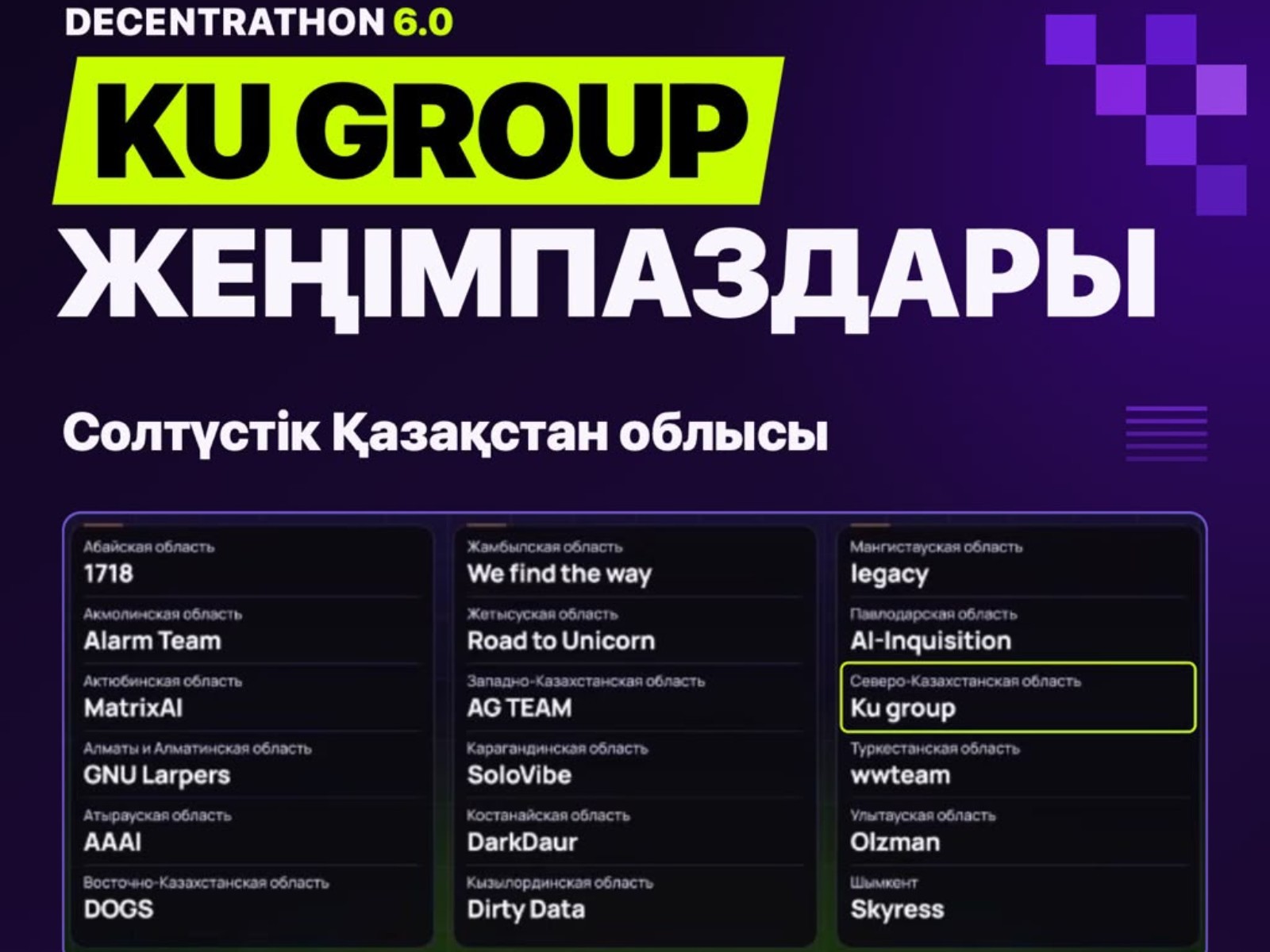
Kozybayev University students Polyakov Maxim and Leontyeva Oksana were among the winners of Decentrathon 6.0, a national hackathon held simultaneously in 19 cities across Kazakhstan.
Our students formed a team called KU Group and successfully represented the North Kazakhstan Region in the competition. They chose the Soup Kernel Challenge technical track.
"The task involved artificial intelligence and optimizing neural network training. In simple terms, we were given a ready-made Qwen language model with 1.5 billion parameters, which required significant GPU resources for training. Our goal was to modify its internal computations so that the model could train faster and use less video memory without compromising quality. To achieve this, we developed custom GPU kernels in Triton, specialized programs that perform computations directly on a graphics processing unit. We optimized the model's loss calculations, mathematical operations within the neural network, processing of 4-bit weights, and memory usage," explained Polyakov Maxim.
Participants had just 36 hours to complete the challenge. Our students studied existing approaches, developed their own algorithms, compared results, and fixed errors. Importantly, they had to do more than simply accelerate training: their solution also had to pass the organizers' rigorous technical tests.
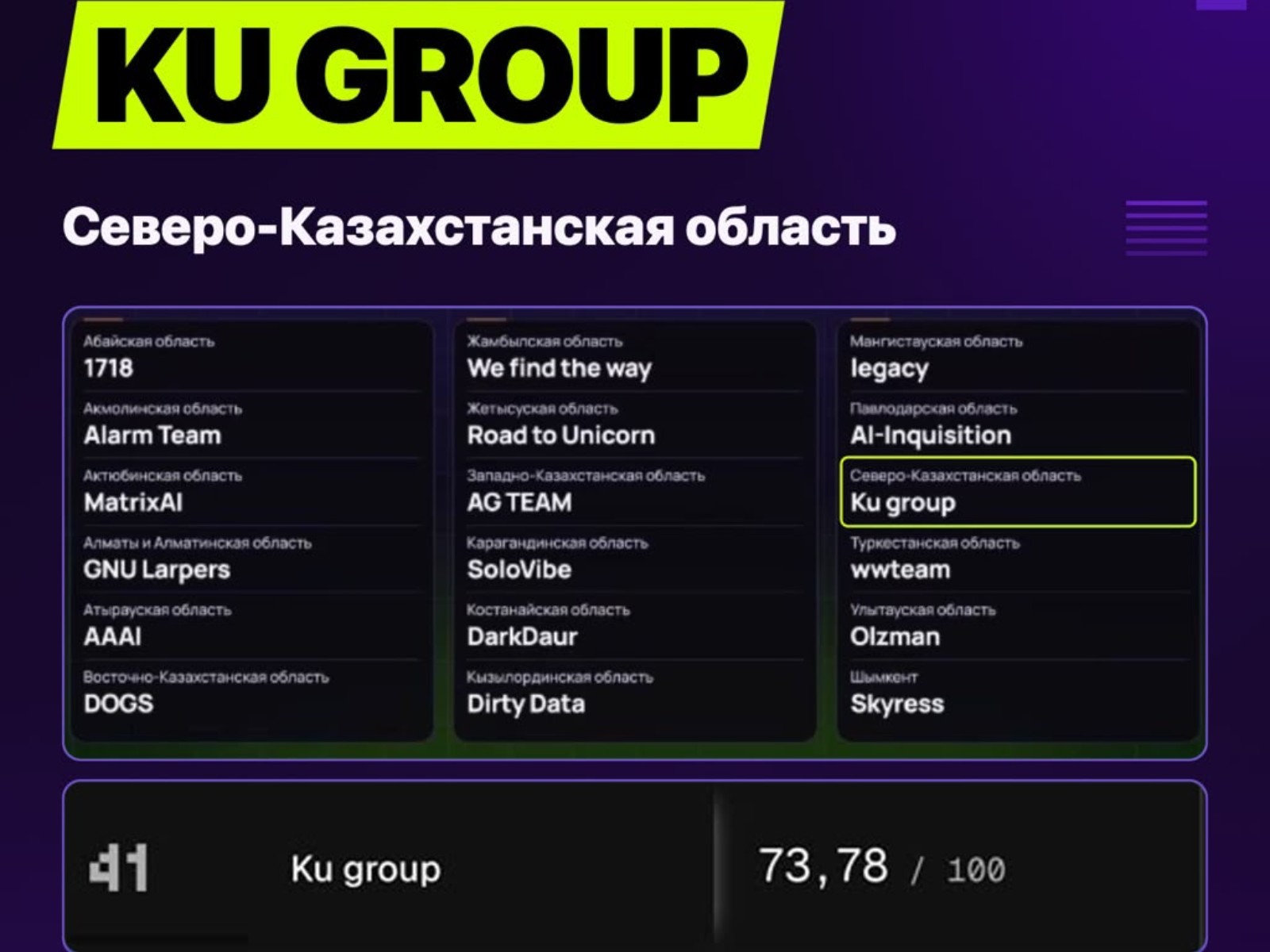
As a result, KU Group took 1st place in the North Kazakhstan Region in the Soup Kernel Challenge track and ranked 41st among 285 teams nationwide, scoring 73.78 out of 100 points. The young developers received a prize of 500,000 tenge for their achievement.
Their other significant accomplishments included accelerating neural network training by 1.56 times, reducing training time by approximately 36%, and cutting video memory consumption nearly 13-fold, from 14 GB to 1.1 GB. At the same time, they maintained training quality and passed all 10 mandatory technical tests.
"The most interesting thing is that this is not just a demonstration project but a real engineering optimization. Technologies like these make it possible to train and fine-tune artificial intelligence models on more affordable graphics cards without the need for expensive equipment," said developer Polyakov Maxim.
It is worth noting that both students are in their fourth year of IT studies and also work at the Center for Artificial Intelligence and Digital Transformation at M. Kozybayev North Kazakhstan University, where they develop digital products and continue to enhance their professional skills.
Congratulations to our talented developers on their well-deserved victory!